The Gamification of The Irish Famine.
A newly released board game titled: The Great Hunger treats Ireland’s famine as an event to be played through and enjoyed as a board game. This sort of framing on the Irish Famine is extremely insensitive, repulsive, and historically inaccurate.
According to the game’s own description, The Great Hunger begins by simulating “good times” in early 19th century Ireland, portraying the potato as a “godsend” that allowed the Irish population to grow. This depiction reflects a profound misunderstanding by Mr. McPartland of Ireland’s pre famine reality.
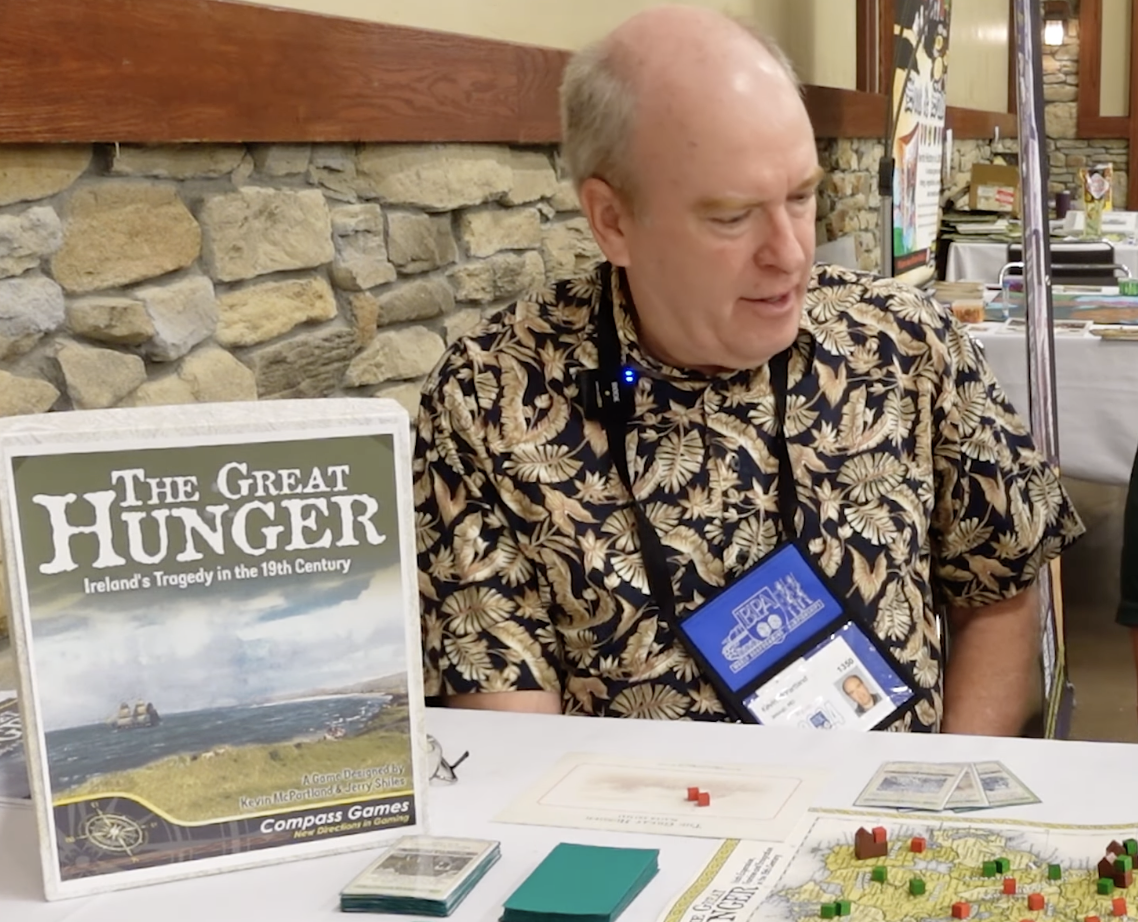
Kevin McPartland
Simply put, the potato was not a blessing for the Irish people. Its dietary centrality was the direct result of centuries of British imperial extraction (land, labor, and resources) that reduced much of the native Irish population to subsistence on ever smaller, increasingly marginal plots of land. The potato became indispensable not due to an Ireland prospering, but because imperial policy left the Irish with no alternative. When the blight struck, those same policies ensured the famine carried out for many years, rather than a quick response.
Food existed in Ireland throughout the Famine , yet it was continuously exported under British policy. Relief efforts were deliberately limited, withdrawn prematurely, or conditioned on labor impossible for the starving. Workhouses were used to discipline and break families, while mass evictions cleared the land. These were not accidents or oversights, but conscious decisions taken with full knowledge of their consequences.
British officials openly described Ireland during this time as “overpopulated”, and regarded the famine as a corrective to this overpopulation. Laissez-faire ideology was elevated above human life. Over one million died, and millions more were forced into exile. Ireland’s population collapsed and is only now in recent times recovering to pre-famine numbers. For this reason, many historians argue that the Famine meets the moral definition of genocide. Destruction of the Irish population through policy, purposeful neglect, and ideological indifference.
Turning such an event into a game trivializes mass death and the generational trauma experienced both in America and Ireland during one of the darkest periods for the Irish people. Survival under famine conditions was not a victory. It was the beginning of a wound carried across generations. By creating and playing a game of the genocide of our ancestors is beyond repugnant. In the best interests of Compass Games, we strongly urge that this game not be released to the public.