The Foundations of Medieval Irish Identity
Perceptions of the past shape how we view the present. Today, one could be forgiven for having misconceptions of history, particularly Western history. Outside observers or those with a passion for Irish history may be confused or disgusted to find that official narratives concerning Irish history and Irish identity in recent years have come under forced questioning by a combination of the Irish government, state organisations, media publications and university academics. Statements like ‘deconstructing Irishness, Ireland for all (except the Irish), Irish people were always mongrels and never homogenous’ among other degrading and sanitising language have become prominent by force in the public square. Those who question these narratives often find themselves subjected to slander, harassment and in worst cases, doxxing. So let us ask, focusing on medieval Ireland from the arrival of Saint Patrick in 432 AD to the Norman Invasion of 1169 AD that facilitated external influences that continue into the twenty-first century, what made Ireland what it was in history? What made the Irish people who they were?
Tuath: The Kin-Group:
The writer Daniel Binchy wrote that medieval Irish society was ‘tribal, rural, hierarchical and familiar.’ The use of the word ‘tribal’ or ‘tribe’ should immediately be disregarded, tuath (plural tuatha) was the foundational unit of Irish society but it didn’t simply refer to land or people in a narrow lens. A tuath was a kin-group, a community of people living in relative proximity to one another in ringforts or small towns who believed themselves to share a common ancestry to foundational figures of their people like kings or mythological heroes, with shared law, shared language (in this case, Old Irish/Seangoidelc) and mutual obligation to one another defining them. One bad harvest could doom a community, a kin-group had to work together for mutual survival, isolation and independence from one’s people was the exception, not the norm.
A tuath combines several aspects into one structure, the people came first and the land came second, land did matter but it was defined by the people who belonged to it. A kin-group wasn’t simply one’s immediate family, it was a wider group of people who claimed descent from a common ancestor, it was a legal community who self governed under the law system known as Brehon Law (or Irish Vernacular Law) and a political unit ruled by a king (rí), but it should be stated this king’s rule was not absolute and his power depended on his kin-group which could contain thousands of tens of thousands of people, it was the king’s duty to uphold the law and maintain the stability of the tuath. A tuath was theoretically part of one all island kingdom, but reality was never simple.
As a foundational structure, a tuath showcases medieval Irish society as being organised and not politically undeveloped or disordered. An emphasis on kinship, collective identity and native legal practice makes it clear that a coherent and practical social order existed prior to external transformations. Understanding Ireland as an island not divided between scores of warring kin-groups with no shared identity but as a complex and stratified centrality contextualises shifts in landholding, governing and identity that shaped Irish society in later periods.
Brehon Law: Law by Custom:
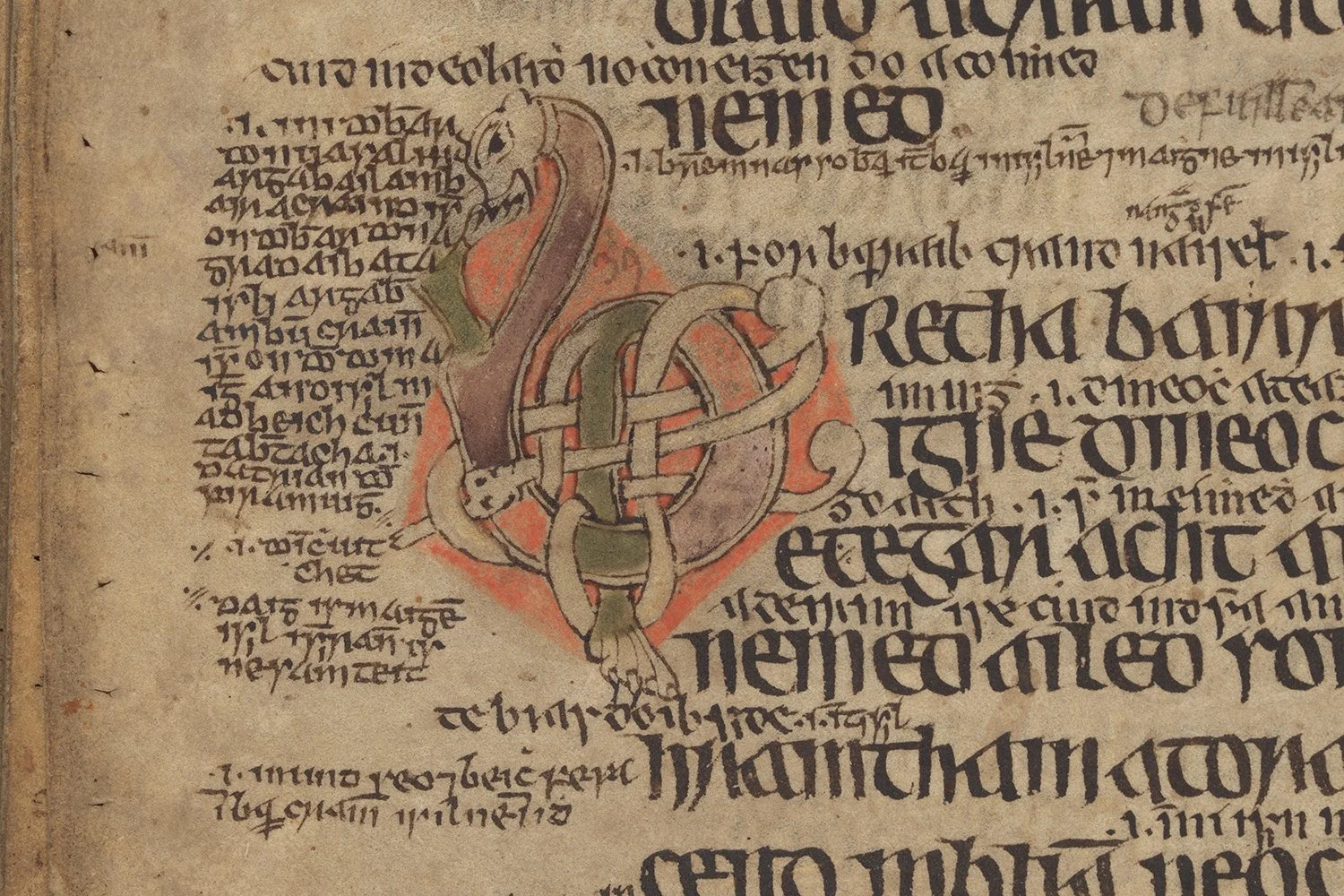
With the introduction of Christianity came literacy and the means to preserve a previously oral based culture on vellum pages. The legal system widely known as Brehon Law operated the means by which early Irish society regulated social conduct, marriage, property ownership, disputes, public order, healthcare and several other aspects of life in this period. The term ‘Brehon Law’ is a later designation by antiquarians in the nineteenth century, derived from the Irish word brithemain (judge) but Brehon Law was not a judge centered law system, it was a community centered law system known as Fénechas, Law of Free Land Tillers. Brehon Law was a highly developed system of customary practice enforced by the community, the king and by a class of elite poets known as filíd who could serve as jurists trained in law, no centralised institution enforced the law and the law transcended political boundaries, giving credence to the idea of a united island and a united people. Keep in mind Ireland was a stratified society in this period, from the lowest slave to the richest freeman to the highest king, everyone was bound to the law and everyone’s place was defined and known. Irish society was by no means equal, everyone had a different price measured in the value of female slaves known as cumala. Women had half the price of men, no matter the rank of either.
Ireland boasts Europe’s largest Medieval law collection, from the Críth Gablach (The Branched Purchase, concerned with status), Uraicecht Becc (The Small Primer, also on status) and the Senchas Mór (Great Tradition, encompasses several civil law concerns). This legal system was concerned with the restitution of victims of crimes or the correct procedure for certain disputes that restored balance in society. From injuries, theft, satire (considered capable of killing), contracts, fosterage, marriage, contracts, clientship, inheritance and all the way down to a dog defecating on someone’s property, these were meant to be resolved through arbitration and the paying of fines via cattle, food products or gold/silver in order to uphold one’s honour and status. The restitution was kept in line with one’s status and material wealth, a king would pay a greater price for breaking the law than a slave. Law was central to the societal hierarchy as a result, imposing obligations across all ranks and binding nobles and commoners alike. Like all things concerning law, just because something is legislated doesn’t mean it was always followed, permitted or tolerated. The fact that these laws were written down in the volume they were suggests their prominence in society.
Enforcement depended on community pressure, kin-groups and families were responsible for ensuring people followed the law as failure to comply could result in the loss of status, legal protections and legal standing within society. A total loss of the latter could result in exile or in later cases, death. Laws legislated and promulgated by a king or national assembly exist as their own category, known as Cáin. The most famous is the Cáin Adomnáín, the first Geneva Accords of their time which forbid the killing of women, children and clerics during wartime. Early Irish law showcases a coherent and consistent legal order that existed in Ireland before later external models of law. The reliance on customary authority, professional expertise and collective enforcement showcases a society where the law was embedded in life rather than imposed from above. Knowing this allows us to appreciate how order was maintained in a kin-group and how justice, obligations and status were articulated in early Irish society.
Kingship: Sacred authority, not absolute power.
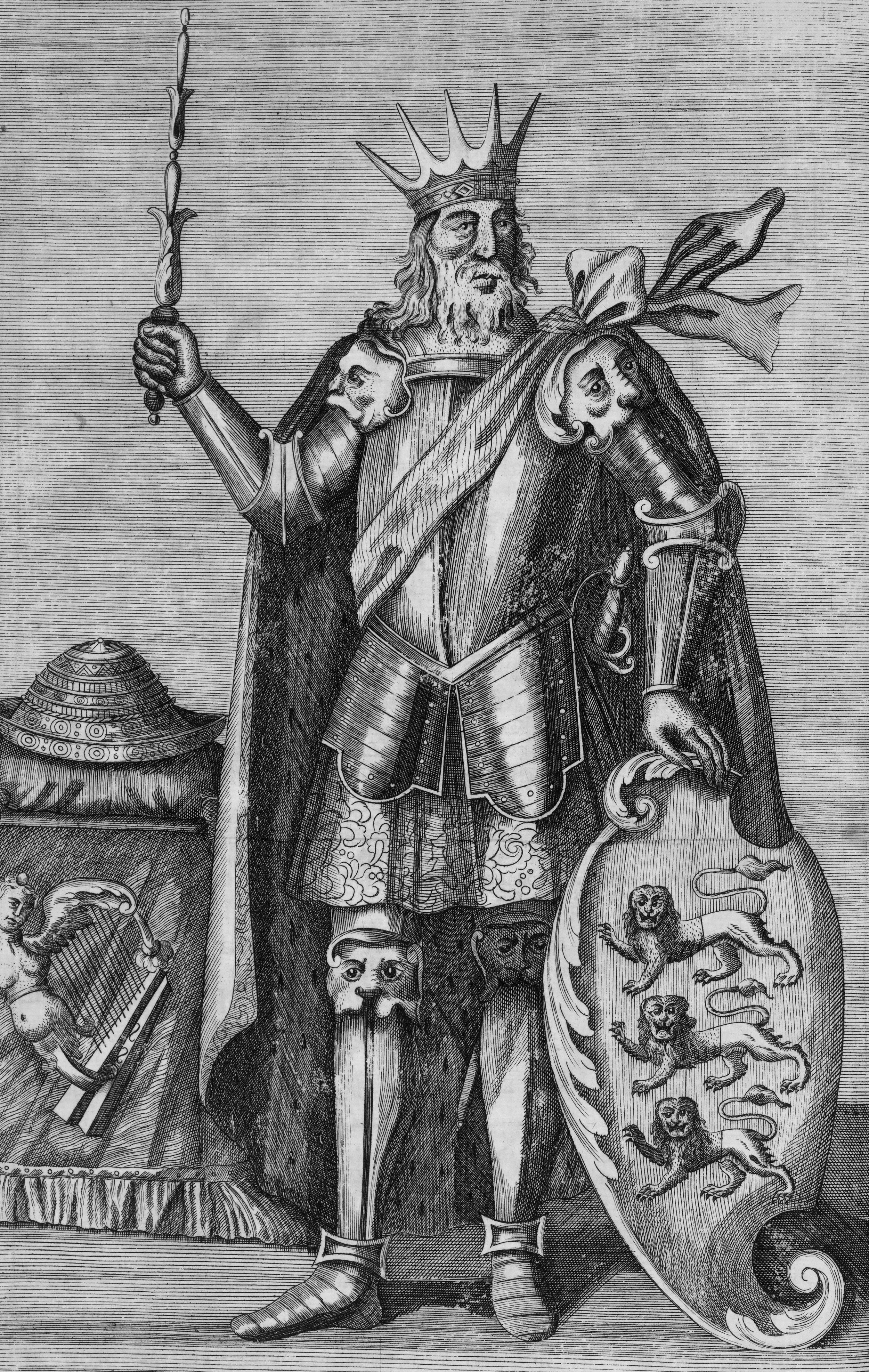
In early Irish society, the idea and practice of kingship was not absolute nor was it a singular occupation. Irish kingship didn’t revolve around one figure for a vast landscape, each tuath had their own king (Rí Tuaithe), kings with retinues/followings who may have had more military power than a Rí Tuaithe (Rí Buiden/Rí Tuirsech), an overking (Rí Ruirech) who ruled multiple tuatha and subordinate kings who paid tribute to him, provincial kings (Rí Cóicid) who held authority over numerous overkings in a province that now make up Ireland’s four provinces (barring Meath which existed as its own province once) and the king of Ireland (Rí Érenn), commonly known as High King, a king who ruled over all kingroups in practice. All kings ruled as a central figure in their respective tuath, his authority was conditional and grounded in his ability to uphold the law and ensure the prosperity of his people in theory.
Various texts from Ireland’s literary culture serve as a form of guidebook for kings before or during their reign. The Audacht Morainn (The Testament of Morann) presents advice from a legendary jurist with the central tenet being fír flathemon, the ruler’s truth/moral correctness in kingship, that a king’s justice affects the world around them. A just king brings good harvests, peace and stability, an unjust king causes famine, disorder and decay. Another text, Tecosca Cormaic (The Instructions of Cormac) focuses on practical rulership, that a king must be generous as wealth must circulate to maintain loyalty, hold measured judgement to avoid cruelty and weakness, listen to wise counsel and not act on impulse. Hospitality, alliances with nobles, contracts and maintaining support were other key aspects expected from a king, he was meant to be bound to the law, not above it. He was to be a guarantor of public order, not its sole arbiter. If war should come, a king had to lead in warfare.
Succession of kingship didn’t revolve around primogeniture (strict inheritance by a named heir) even if kingship was drawn from defined kin-groups or royal lineages verified by extensive genealogical records. Eligibility extended to a wide group of male heirs from within the ruling family which in turn created a competitive environment for reputation, political knowledge, education and in the worst cases resulted in blindings and castration to disqualify their possibility of kingship if they aren’t outright killed. Kingship was not a personal possession but an elected office that required the recognition and consent of those who were high in status and influence within the kin-group, but was by no means always a clean and honourable process. The process known as tanistry wasn’t a democratic vote as we see voting today.
Irish kingship as a result saw kings as being more directly obligated to their people and lived among their people instead of a distant castle. Kingship operated as a negotiated institution within the wider structures of kin-groups and the law, where a king’s authority was inseparable from responsibility and where legitimacy came from the sustained efforts to serve their people, not from dominance or coercion alone. It was not a perfect system but it showcases that Irish people attempted to govern their own affairs with the means that were available to them in response to the world they lived within.
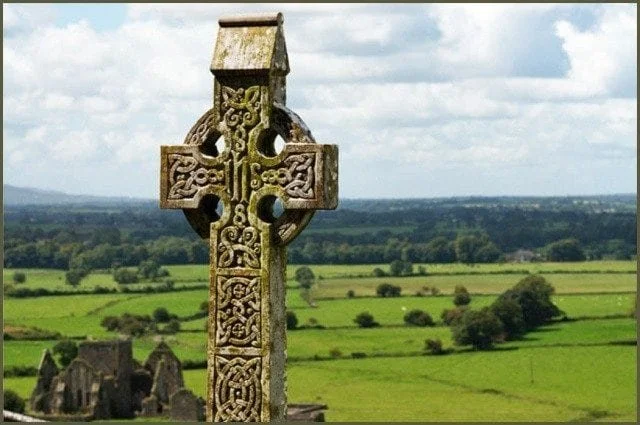
Christianity: A central pillar of the medieval world:
Medieval history as a whole is not complete without Christianity and the same is true for medieval Irish history. Contrary to certain narratives of a destructive force with a year zero policy, Christianity in Ireland was woven into the framework of the tuatha. Christianity in Ireland faced a particular challenge that it seldom faced in Roman territories where the faith was beginning to become prominent. This challenge was that Ireland lacked civitas, or rather the Roman understanding of cities as we understand them today. From civitas, early bishoprics were formed across western Europe that allowed the Catholic church to develop and become a central pillar of European society. In Ireland, the church had to adapt to a landscape where conventional methods weren’t feasible. They had to adapt to the indigenous framework while reshaping Ireland’s culture, law and identity. Brehon law, literature and kingship from the arrival of Christianity came to be greatly influenced by Christian doctrines and teachings, like how politics may shape our laws and literature today.
While Saint Patrick receives the most credit (and rightly so) for bringing the faith to Ireland in the fifth century, others had arrived before him, notably Bishop Palladius who ‘was sent to the Scotti (Irish) believing in Christ’, indicating a Christian community in Ireland before Saint Patrick’s missionary efforts in 432 AD. The process of Christianity spreading was gradual and in multiple phases, possibly starting from traders arriving from Roman Britain on western coastal settlements in Ireland where the faith was promulgated from there at a local level. During Saint Patrick’s efforts, he sought to convert kings and nobles as their people would soon follow in their ruler’s stead. This was an effort mostly accomplished without bloodshed, depending on the source material in question, which was an incredible feat for this time period. Rather than dismantling the previous Irish society that existed, Christianity integrated with it and kin-groups, legal traditions and kingship continued to function, now with a Christian influence.
The key adaptation that Christianity had to make in Ireland was the monastic model. Forms of monasticism existed elsewhere in Europe but were highly localised and not as widespread until later periods. Due to a lack of bases to establish bishoprics in, Christianity in Ireland became monastic in its character where the Abbot would take the place of a Bishop until the means to establish bishoprics became possible in the future. Until that happened, monasteries became the primary centres of religious authority across Ireland, Abbots could wield equal or greater influences than kings and monasteries were often founded and patronised by powerful families within the tuath. As a result, monasteries didn’t simply become religious centres, they also served as economic hubs where craftsmen gathered, sites of monastic education and manuscript production and places of refuge and diplomacy in wartime. The Church had a presence that impacted the lives of everyone beyond spiritual matters, employing builders, tanners, brewers, beekeepers, laypeople and allowing monks to pursue what would become one of the most advanced systems of education in a Europe that was facing decline with the gradual fall of the Western Roman Empire. It was this monastic prominence that allowed a significant amount of Classical European literature to be preserved, along with producing no small amount of illuminated indigenous works like the Book of Kells, the Faddan More Psalter and the Book of the Dun Cow, among other names that form one of Europe’s largest vernacular literary collections. It was these same monasteries that educated the men who would later assist in establishing monasteries across western Europe in later centuries while bringing Ireland into a Golden Age that lasted until the first Viking incursions in the late eighth century.
Some might argue that while the Roman Empire didn’t conquer Ireland, Ireland was romanised by the Catholic Church. Christian values were incorporated into legal texts, concepts of sin, penance and moral accountability entered legal thinking, kings were expected to rule justly in accordance to Christian morality, monks contributed significantly to intellectual/philosophical life and ideas of marriage, attitudes towards justice and charity took hold without dismantling what came before. Christianity was no simple external imposition, it became embedded and central to early Irish life in all aspects and produced a society with one of Europe’s oldest literary cultures that remains a source of inspiration and admiration to people across the world today.
Conclusion: Identity and Continuity:
With these four central points taken together, early Irish society formed a relatively coherent worldview that shaped how people understood themselves and their place in the world. Understand that people in the past lived, loved, failed and laughed as we do today. At its core, we can see that identity in Ireland revolved around one’s kin-group and not the sole individual, a member of a kin-group who was a participant in an established legal order, a follower of their king and a soul that existed with an ordered Christian moral universe. These layers serve to reinforce one another, not conflict with each other.
The tuath ensured that identity began with who you belonged to, your rights, protection and status came from your kin-group and exile or exclusion was one of the worst possible fates you could suffer. Community defines the individual, not the reverse. With identity came a connection to honour, status and reputation, your worth was not abstract, it was legally recognised and socially enforced. This created a society that was concerned with fairness, obligation and restoring balance following disorder. Kingship showed that power was close to the people, dependent on the king’s conduct and was subjected to judgement that ideally held a king to account. A king who ruled unjustly wasn’t simply politically weak, he could be considered fundamentally illegitimate. Authority existed to serve the community, not dominate it. With Christianity that influenced all of these aspects in mind, identity saw that individuals were now moral beings before God, that justice was social and spiritual and kingship became ethically accountable in a new manner. This in turn fused existing structures with a universal and ordered moral framework without erasing the indigenous character.
With this, a question of how people back then conceptualised themselves comes into question. We see that Irish people in this time period identified with their ancestry, their kin-group and their roles in society, sharing a common language, law and faith with others on one island. Kings traced their lineages through intricate and complex genealogical tracts ratified by a Christian literary culture, showcasing identity being rooted in ancestry and politically significant. Texts like Audacht Morainn and Tecosca Cormaic show that society expected rulers and by extension their people to act justly and truthfully, sharing a belief in moral order shaping reality. Ethics and existence are tightly connected as a result. With Christianity, the Irish people saw themselves as part of the Christian story and that their lives had meaning beyond the immediate world. As a result, we see that Irish identity has a strong emphasis on family and lineage, the importance of community and place, a deep cultural memory tied to history and ancestry and a tendency to view authority as conditional and personal, not as an abstraction.
This isn’t accidental or coincidental, these are echoes of an early system established by a people who set out to establish themselves as a distinct people in the world. As an infamous statement from the Life of Saint Malachy in the twelfth century goes in response to Saint Malachy wanting to introduce French architectural style monasteries and monastic orders in Ireland, ‘Scotti sumis, non Galli’, ‘We are Irish, not French’. Identity wasn’t simply local, it was ethno-cultural, distinct from those beyond Ireland. Even amidst uncertainty in modern life, remembering the structures that shaped the Irish people can allow us to remain grounded in a history that is not distant or incomprehensible. It is still quietly present and it continues to influence the Irish people and the Irish diaspora throughout history and to today whether we realise it or not.
-Fia Bán